Article · September 28, 2026
What Happens If You Miss a BNPL Payment in the Philippines?
Late fees, frozen limits, and credit-file risk when a Filipino shopper misses SPayLater, GGives, BillEase, or Atome — plus what to do before the due date.
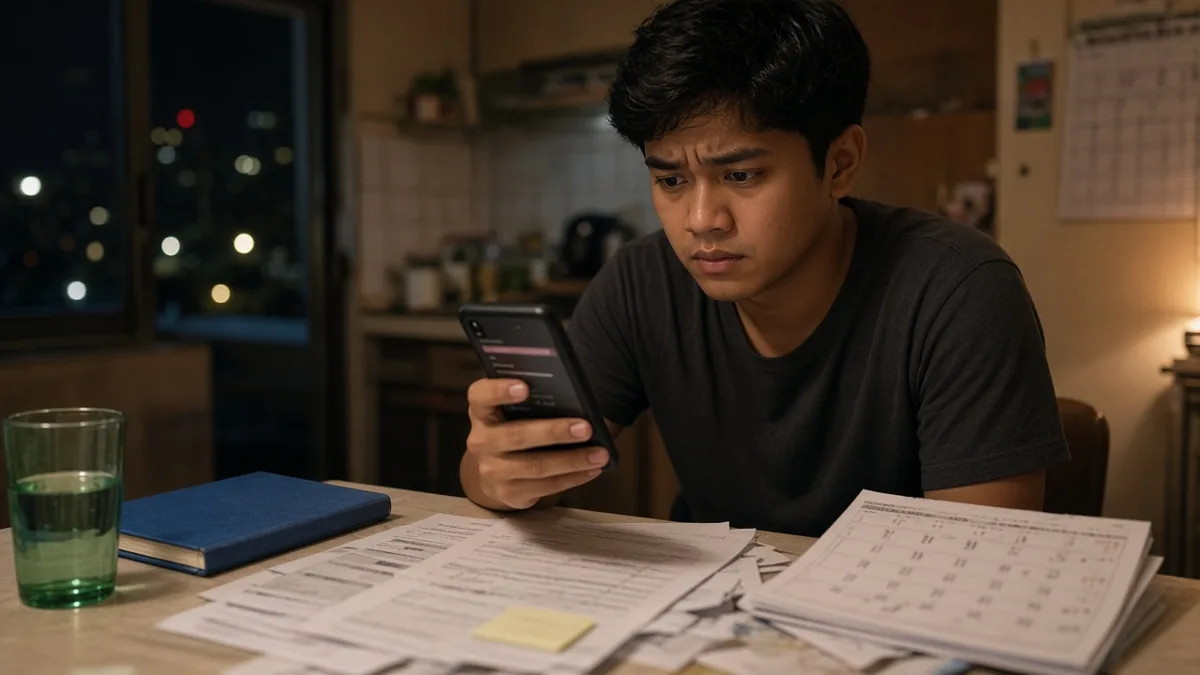
Missing one buy-now-pay-later due date feels small because the original purchase was “only” a phone case, a router, or a sale-week gadget. The bill that posts is often larger than that feeling. Providers charge a late fee immediately, some add a daily charge, and a growing share of repayment history can end up in the national credit file.
This is the practical sequence: what the major apps publish, what it can mean for the next loan, and what to do if payday is already late. It assumes you still intend to pay. It is not a way to game a due date.
The first cost is the fee schedule, and every app’s is different
There is no single Philippine BNPL penalty. Read the plan you actually opened.
GGives (GCash). GCash’s help center states a late payment fee of 1% of the loan amount for each missed due date, plus 0.15% of the outstanding principal per day until you pay. Their sample on a ₱10,000 loan, five days late, came out to ₱162.50 — a 1% hit on the original amount plus the daily piece on what you still owed. A longer delay costs more, and the next due date still arrives.
SPayLater (Shopee). Published late charges sit around 2.5–5% of the overdue amount. Shopee can also restrict SPayLater and related account features while you are behind. Interest and the processing fee you already accepted do not disappear because a payment was late.
BillEase, Atome, and store plans. Late fees vary by product. The number that matters is the one in your schedule, not a figure copied from a Facebook comment. Our provider comparison is about choosing a plan before you borrow; this page is about the after.
Credit-card installments are a different contract. A missed card due date can include a late fee and, if your agreement has an acceleration clause, the bank may treat more than the current installment as due. That path is compared in credit card installment vs BNPL.
What you lose besides the fee
- The limit. A missed SPayLater or GGives payment is a common reason the next checkout no longer offers installments. People then open a second app to cover the first, which is the pattern in how many installment plans is too many.
- The sale you were waiting for. A frozen limit during 11.11 does not pause the late fee. Planning due dates before the sale is part of the 11.11 installment guide.
- Room in the monthly budget. Once two or three plans slip, groceries and utilities get squeezed. That is the point where households start using a new loan to pay an old one.
CIBI, citing Credit Information Corporation data, has described short-tenor products — the bucket where most BNPL sits — as a segment with higher delinquency than larger, traditional loans. The balances are small. The habit of missing them is not rare. Lenders can see that pattern once it is in a credit file.
Can a missed BNPL payment show up on your credit report?
The Credit Information Corporation keeps the national credit file under Republic Act 9510. Financing companies that submit data are part of the system the Securities and Exchange Commission supervises; card late fees are a separate contract under the Bangko Sentral ng Pilipinas. Banks, financing companies, and other covered lenders submit borrower and repayment data. Some BNPL and financing providers are in that system; not every checkout button is. Do not assume your app is invisible, and do not assume a single late payment has already been posted, unless your provider says it reports.
What a credit report is designed to show:
- Whether payments arrived on time
- How much you owe relative to limits
- How many new credit lines you opened recently
Negative information is useful to the next lender deciding a phone plan, a card, or a personal loan. The practical response is to ask the provider whether it submits to CIC, then pull your own report if you are about to apply for something larger. CIC explains how the report is assembled and what a waiver of access means when a lender checks you.
Paying late and then catching up is still better for that file than leaving the balance unpaid until it is endorsed to collections. Collections is a separate problem: more fees, and a record that is harder to explain.
What to do before the due date
If you can see that you will be short, act while the payment is still upcoming.
- Open the app and note the exact due date, the amount, and the late-fee rule for that plan only.
- Pay whatever you can on or before the date if partial payment is accepted. Confirm whether a partial payment stops the daily charge or only reduces it. GGives’ daily percentage, for example, is tied to outstanding principal.
- Use the in-app help path to ask for a reschedule or a one-time extension before you miss. Some providers allow it; none of them are required to offer it because you asked on social media.
- Cut the next purchase. A new 11.11 cart is how a one-month miss becomes three plans.
- If several plans collide on one Friday, list them by cost of being late, not by which app nags the loudest. A daily percentage can outrun a flat fee within a week.
Align future plans with salary before you take them. The worksheet is payday installment scheduling.
What not to do
- Do not open GGives to pay SPayLater, or the reverse. You have renamed the debt and added a new fee schedule.
- Do not ignore the app. Late fees that include a daily component get worse while the notification sits unread.
- Do not treat “0% interest” as “0% if I am late.” Zero interest is the on-time promo. Late fees sit outside it. See zero-interest fine print.
- Do not finance a replacement gadget while the first plan is past due.
A recovery order that fits a tight month
Use one month as a reset:
- List every plan: provider, remaining balance, next due date, late rule.
- Keep food, rent, utilities, and transport outside the discussion. Those get paid first.
- Throw extra cash at the plan with the harshest daily or percentage late fee, while still paying the minimum on the others so they do not start their own late clock.
- Pause new installments until the count is back inside the cap you chose.
If the balances are already larger than a month of discretionary income, talk to the provider about a hardship option and get advice from a regulated lender or a nonprofit counselor you trust. This site is an editorial guide, not a collection agency and not a lender.
How to avoid the next miss
- One new plan at a time, with the total written down using the checkout questions.
- Calendar alerts two days before each due date.
- A small buffer that is not also your sale-week fund.
- Cash for anything under a week of groceries. Installments are for a planned, higher ticket that passed the test in the smartphone or home and lifestyle guides.
Bottom line
A missed BNPL payment costs the published late fee first, then access to the limit, then — if that provider reports — a mark the next lender can see through the Credit Information Corporation. The cheapest fix is the payment you make before the due date, or the reschedule you request while the amount is still current.